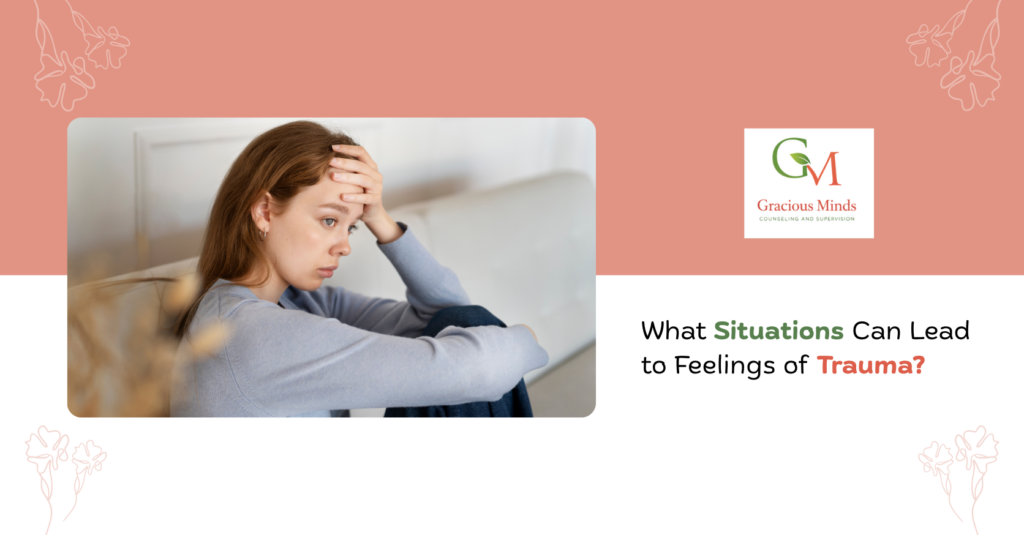
Life is full of happy days, like birthdays and playing with friends. Sometimes, bad events happen that leave a deep mark on our minds and bodies. People call this trauma.
You might wonder what events can cause these heavy feelings.
Trauma does not come from just one single type of event. It can happen in many different ways and it affects everyone differently.
At Gracious Minds Counseling and Supervision, we help people with these big feelings. We provide trauma therapy in Sugar Land, Greater Houston and Louisiana. We aim to foster healing with compassion.
Therapy helps people understand their feelings. It builds coping skills. It also gives them control over their lives.
Let’s learn about situations that can lead to feelings of trauma.
What Is Trauma?
Trauma is a strong emotional reaction to something scary, painful, or overwhelming.
A person may feel:
- Unsafe
- Afraid
- Upset
These feelings can change how someone views themselves, others and the world.
Two people can go through the same event and feel differently. What feels easy for one person may feel very hard for another. Every person’s feelings matter.
Situations That Can Lead to Feelings of Trauma
Various situations can cause trauma, leaving individuals feeling unsafe or helpless.
Accidents Can Cause Trauma
Accidents are a common cause of trauma. Car crashes are a big one. You might think you are going to die. You might see others get hurt.
Falls can also cause trauma. So can bike accidents. Even if you’re not seriously injured, the fear may linger.
Kids can get trauma from accidents too. A dog bite may instill a fear of all dogs, while a car crash can make them afraid to ride in cars. These fears are valid.
Being Hurt on Purpose
When someone hurts you on purpose, it can be very frightening. This is called assault. There are two main types:
- Physical Assault: When someone hits you
- Sexual Assault: When someone touches you inappropriately
Assault can affect anyone, from kids to adults.
After an assault, you might feel a mix of emotions, such as:
- Distrust of others
- Feeling ashamed or dirty
- Believing it was your fault
However, you will never be to blame for that. The person who hurt you is the one to blame.
Abuse at Home
Home should be a safe place. But for some people, home is not safe. Abuse can happen in families. It can happen between partners.
Domestic abuse is when one partner hurts the other. It can be hitting. It can also be name-calling or threats. It can be controlling everything the other person does. This is very scary.
Child abuse is also a cause of trauma. When a parent hurts a child, it is confusing. Kids depend on adults. When the adult is the one causing harm, it breaks trust.
Bullying Hurts Deeply
Bullying isn’t merely “children being children.” It can inflict genuine emotional pain. When someone targets you repeatedly at school or online, it can make you feel insignificant.
People may bully you for various reasons, including:
- Your skin color
- Your gender
- Your sexual orientation
Such cruelty can create lasting emotional scars.
War and Fighting
Living in a war zone is terrifying. People witness horrific events every day. Soldiers see their friends get hurt, but you don’t have to be a soldier to feel scared. If you live in a place with fighting or gang violence, danger can seem like it’s everywhere. This is a very hard way to live.
Scary Things in Nature
Natural disasters can also be frightening. They include:
- Earthquakes
- Floods
- Big storms
These events are scary because we cannot stop them. You might lose your home or someone you love. You might have to run away to be safe. After a big storm, the world might not feel safe anymore. This feeling is normal.
Losing Someone You Love
Losing someone is always hard. But when it happens suddenly, it can cause trauma. Maybe it was a car crash. Maybe it was a heart attack. Maybe it was suicide.
When you do not get to say goodbye, it can feel like the world does not make sense. You might have bad images in your mind that you cannot forget.
Scary Trips to the Hospital
Hospitals can be scary. Getting poked with needles or having surgery can make a child feel helpless. Even giving birth can be frightening for a mom if things don’t go as planned.
Being very sick and thinking you might die can leave fear in your heart, even after you get better. Here are some common fears people may face:
- Needles and injections
- Surgery and recovery
- The possibility of death
Trauma at Work
Certain professions expose individuals to trauma. Police officers witness distressing events. Firefighters encounter horrific situations. They confront injuries and death, making critical decisions.
Doctors and nurses can experience trauma too.
Helping others is rewarding. However, seeing repeated suffering can cause stress and emotional pain. This is called secondary trauma.
Trauma That Happens Over and Over
Trauma can be a repeated experience, not just a single event. This is called complex trauma.
A child who is neglected for years can have this. Long-term bad relationships can lead to this.
When trauma happens over and over, it changes how you see the world. You might:
- Always expect the worst
- Not trust anyone
- Feel like you are not good enough
These feelings are not your fault.
Small Traumas Add Up
Not all trauma comes from big events. Sometimes it comes from small things. Being ignored by your parents. Being called names at school. Being left out by friends.
These things might seem small to others. But they add up. Over time, they can make you feel like you do not matter.
Signs That You Might Have Trauma
Look for these signs:
- Trouble sleeping
- Bad dreams
- Feeling scared all the time
- Avoiding places that remind you of what happened
You might also experience feelings like:
- Feeling nothing at all
- Feeling empty
- Feeling like you are not really there
- Forgetting parts of what happened
These signs can mean your brain is trying to protect you. Support from a therapist can help.
How Trauma Therapy Can Help
Trauma therapy gives people a safe place to talk about difficult experiences.
A therapist can help people:
- Understand their feelings
- Learn coping skills
- Feel safer
- Build confidence
We offer trauma therapy services to children, teens, and adults in Sugar Land, Greater Houston, Texas and Louisiana at Gracious Minds Counseling and Supervision. We treat everyone with compassion, care and individuality, addressing each person’s own healing process.
Therapy techniques can be:
Trauma-Focused Cognitive Behavioral Therapy
It helps children and families understand their thoughts and feelings. It teaches healthy ways to handle difficult emotions.
EMDR Therapy
It helps people process unpleasant memories. It reduces the impact of trauma.
Cognitive Behavioral Therapy for Insomnia (CBT-I)
CBT-I can help those with sleep issues from stress, anxiety, or trauma.
Healing takes time, but with support, emotional well-being is achievable. They can also build confidence and find peace.
Finding Support for Trauma
Trauma can feel isolating and overwhelming. If you relate to any of the situations we discussed, remember that help is available. Seeking support shows strength.
Healing takes time, but with the right help, you can get better.
Gracious Minds Counseling and Supervision offers trauma therapy in Sugar Land, Greater Houston and Louisiana. Call us to learn more or to set up a free talk.
FAQs
Can trauma occur without physical harm?
Yes. Emotional trauma can arise from witnessing violence, abuse, or feeling unsafe.
Does everyone with trauma get PTSD?
No. Not everyone develops PTSD; many recover naturally or with support.