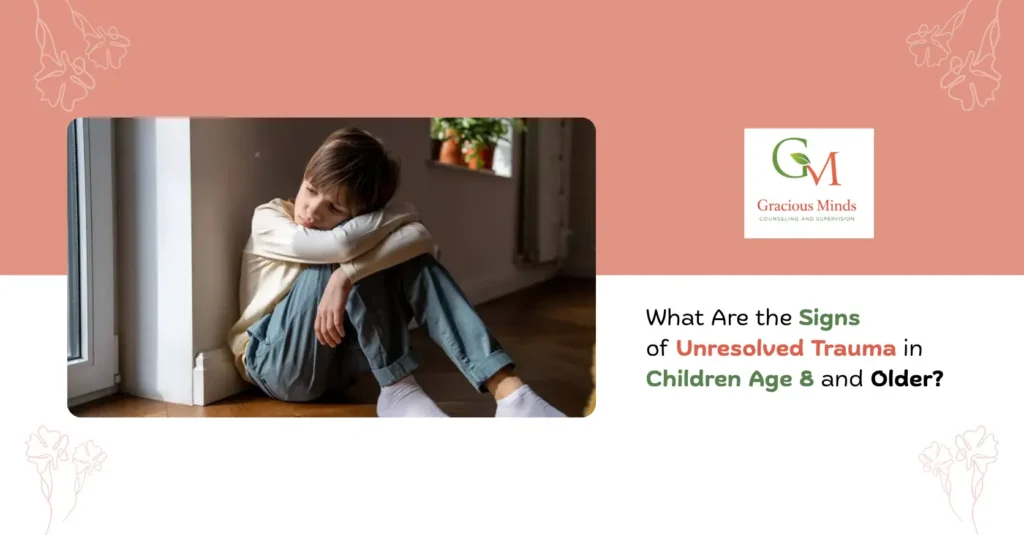
Childhood should be a safe and happy time. But sometimes, scary or hard things happen. When a child goes through a very bad event, it can leave a deep mark. This mark is called trauma. Without proper support, this pain can remain unresolved.
By age eight, children know how to hide their feelings. They might look fine on the outside. They go to school and eat their dinner. But deep down inside, they might be hurting very much. It means they may need more support to feel safe and understand what they have been through.
At Gracious Minds Counseling and Supervision, our child therapy services support children and families facing emotional, behavioral and life challenges.
Let’s look at the main signs of unresolved trauma in older children.
Signs of Unresolved Trauma in Children Age 8 and Older
Changes in How They Act
One of the first things you might notice is a big behavior change. Children with hidden hurt often act out in strange ways. They might not know how to say they are in pain because they do not have the right words yet. Instead, their actions do the talking for them. Pay close attention to how they play and talk.
- Sudden Anger
Your child might get mad very fast. Small problems might cause big yelling fits. If they drop a pencil, they might scream. They might break their toys or hit other people. This anger is often just hidden fear.
- Pulling Away
A child who once enjoyed socializing may isolate themselves, spending all day in their room and losing interest in hobbies and sports.
- Acting Younger
Sometimes, older children might regress, using baby talk or clinging to you for comfort, seeking the safety of early childhood.
- Taking Big Risks
Some may break rules, sneak out, or engage in dangerous activities without regard for their safety, reflecting confusion about risk.
School and Learning Struggles
School takes a lot of brain power every day. When a child is dealing with past scary events, their brain is too tired to learn new things. You will often see signs of this deep hurt in the classroom. Teachers might send notes home about these problems.
- Trouble Paying Attention
Trauma makes it very hard to focus on a task. Your child might stare out the window during math class. The teacher might say they are daydreaming a lot. Their brain is busy thinking about their worries.
- Dropping Grades
A student who used to get good grades might start failing tests. They might forget to do their homework. Reading and writing become too hard. The schoolwork is just too hard to think about when they are sad.
- Fighting with Friends
School is a social environment. A hurting child may distance themselves from friends, get into fights or misinterpret kindness as meanness.
- Fear of Going to School
Your child may cry each morning, wanting to stay home. School’s loud noises and crowds can scare them, making home feel safer.
Body Aches and Sleep Problems
Sad feelings can make a child feel unwell. When kids can’t express their fears, their bodies may show signs of distress. Physical signs often appear and reveal their pain.
Children may experience various physical symptoms, such as:
Tummy aches are common. Children often complain of stomach pain, especially before school. This discomfort usually comes from worry.
Frequent headaches can result from stress. If doctors find no health issues, these headaches may stem from anxiety. They often cause tightness in the neck and head.
Sleep becomes tough for children with unresolved trauma. This can lead to:
- Bad dreams
- Nighttime awakenings filled with fear
Bedwetting in older children, who usually stay dry at night, signals serious stress and hidden fears. Because of poor sleep, they often feel tired during the day. This leaves them lacking energy for activities and preferring to rest on the couch.
Big Feelings They Cannot Control
Older children often learn to calm themselves when upset, but trauma can disrupt this skill. Their emotions can become overwhelming.
For example, a spilled cup of milk might lead to hours of crying, as they see everything as a disaster. Their sadness can overflow.
They may also:
- Startle easily at loud noises, like a door shutting
- Develop a renewed fear of the dark
- Worry excessively about bad things happening to them or their siblings
These reactions can become common in children who have experienced trauma.
They may experience sudden panic, feeling breathless while their heart races. This is a panic attack, which happens when their brain senses danger.
Sometimes, the child may feel empty, appearing blank and indifferent. This is their mind’s way of protecting them from more pain.
How Professionals Can Help
Seeing your child struggle with these signs is very hard. It breaks a parent’s heart. But you do not have to fix this all by yourself. Professional help makes a huge difference in your child’s life.
At Gracious Minds Counseling and Supervision, we provide tailored support for each child’s needs. We also involve families to ensure children feel supported both at home and in therapy.
Our compassionate counselors use:
- Play
- Art
- Conversation
These methods help them find the right words for their pain.
We create a safe space where your child can express themselves without fear of judgment. Children learn to calm their busy minds and manage anger and fear through healthy techniques such as:
- Deep breathing
- Fostering positive thoughts
Trauma affects the whole family. We help parents understand what their child needs right now. We guide you on how to support them at home, so peace returns to your house. We help your child face their scary memories gently and slowly. Over time, those memories will stop hurting them so much. They can go back to being a happy kid.
How Parents Can Support Their Child Before Professionals Help
Parents can help by staying calm, listening and giving children time to talk. It is important to let children know that their feelings matter.
Helpful steps include:
- Listen without forcing your child to talk.
- Keep daily routines as steady as possible.
- Give simple, honest answers.
- Offer comfort when your child feels afraid.
- Praise small steps, such as going to school.
- Avoid saying, “You should be over it by now.”
Children heal best when they feel safe and supported. A caring adult can make a big difference.
Final Thoughts
Unresolved trauma is a very heavy weight for a young child to carry. Kids aged 8 and older might show signs through their actions, their feelings, their schoolwork and their bodies. They may show aggressive behavior, pull back on hugs, or express discomfort with their belly.
Every child has the right to safety and happiness. If you notice these behaviors in your older child, seek help.
Contact Gracious Minds Counseling and Supervision today. We can work together to bring your child’s smile back and create a bright future and hopeful days for your child.
FAQs
Can a child truly heal from unresolved trauma?
Yes, absolutely. With the right help and a loving home, children can fully heal. Therapy teaches them how to process their scary feelings and move forward healthily.
Should I ask my child directly about the bad event?
It is best not to force them to talk. You can softly say you are ready to listen. Let them come to you when they feel brave enough.