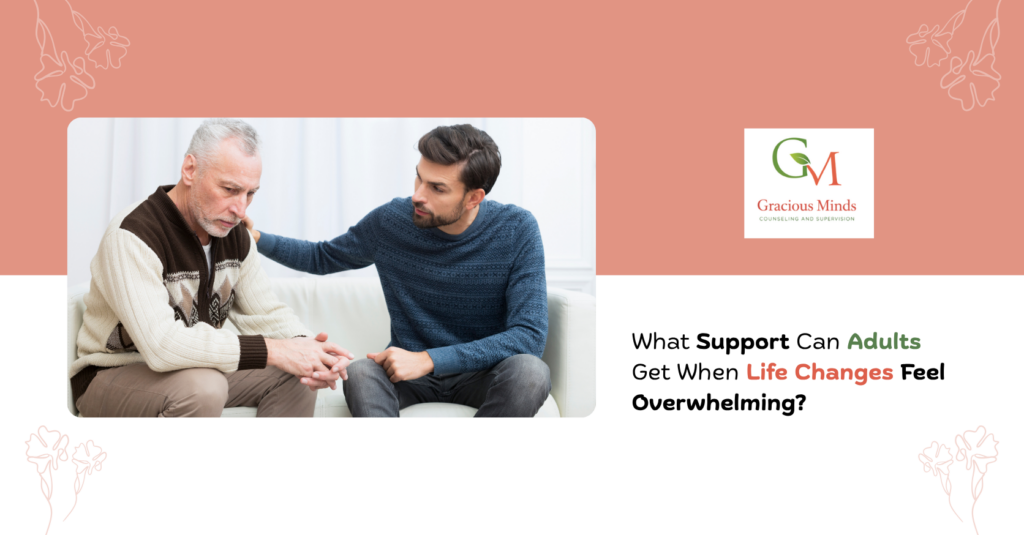
Life is full of big changes. Sometimes, these changes are happy. You might get a new job. You might move to a new house. Other times, the changes are sad. You might lose someone you love. You might feel lost.
Major life changes can make you feel like you are standing in a storm. The wind is blowing hard. You do not know which way to go. This is a very normal feeling.
Many adults feel this way. You are not alone. When life gets too heavy, there is help waiting for you. You need to know where to look.
At Gracious Minds Counseling and Supervision, we offer compassionate, personalized support for adults facing anxiety, depression, trauma, relationship concerns, stress and major life transitions.
Let’s talk about the support adults can get when life changes feel overwhelming.
Why Major Changes Make Us Feel Overwhelmed
When your lifestyle changes, it’s normal to feel overwhelmed. Your brain prefers things to stay the same. Your brain has a sense of security when you don’t change.
A major change breaks your normal routine. New rules apply. It is necessary to meet new people. You have to figure out a new way to live. This takes a lot of energy.
It may cause dizziness and excessive weariness. You may be crying over changing your lifestyle. You may worry about tomorrow.
All of these feelings are okay. You do not have to hide them. Crying is okay. Being angry is okay. The first step to feeling better is letting yourself feel sad or mad. You are human. Humans feel big feelings.
What Support Can Adults Get When Life Changes Feel Overwhelming?
Many kinds of support can help you find your footing again.
Adult Therapy for Major Life Transitions
Adult therapy lets you handle big transitions without judgment. Rather than suppress a challenging emotion, try to grasp it.
At Gracious Minds Counseling and Supervision, we take a client-centered and individualized approach. We consider each person’s experiences, strengths, needs, preferences and goals rather than using the same plan for everyone.
This may be useful in significant life changes. Therapy may help you:
- Understand strong emotions
- Identify sources of stress
- Build healthier coping skills
- Improve communication
- Set healthy boundaries
- Work through grief and loss
- Manage anxiety and depression
- Adjust to changes in relationships
- Develop greater confidence
- Create practical steps for moving forward
Support for Anxiety and Emotional Overload
Major changes can bring Major feelings. You may worry a lot. You may feel sad all the time. You may not want to do things you love. These are signs of anxiety and depression and other concerns. Many adults feel this way. Counseling can help.
At Gracious Minds, counselors help with worry and sadness. We use methods that work. We look at you as a whole person. We help you see why you feel this way. Then we help you feel better.
You can learn to calm your mind. You can learn to be kind to yourself. You can take small steps to feel like you again.
Support for Relationships During Times of Change
Life transitions often affect relationships. Stress can make communication harder and may lead to arguments, withdrawal, resentment, or misunderstanding.
Counseling can provide a place to explore these patterns. You can learn how emotions affect communication, understand personal needs and develop healthier ways to handle conflict.
Relationship concerns do not always mean a relationship has to end. Sometimes, support can help people understand each other better and make thoughtful decisions about what comes next.
Trauma-Informed Support for Difficult Experiences
Some changes come from scary events. Maybe something bad happened to you. That pain is called trauma. Trauma can make you feel scared. It can make it hard to trust people. It can make you feel unsafe.
At Gracious Minds Counseling and Supervision, we provide trauma-informed therapy that respects each person’s pace and sense of safety. Treatment can begin with stabilization, grounding, coping skills and emotional safety.
We also use EMDR therapy. EMDR helps your brain work through hard memories. It can make those memories feel less heavy. Many people feel better with EMDR. You do not have to carry scary memories alone. A kind counselor can walk with you as you heal.
Learning Better Coping Skills
When life feels hard, you may use habits that do not help you for long.
You may avoid problems. You may stay away from others. You may work too much or keep your feelings inside.
Counseling can help you learn better ways to cope.
These skills may include:
- Deep breathing
- Mindfulness
- Healthy thinking
- Better communication
- Setting boundaries
- Solving problems
- Managing strong feelings
- Taking care of daily needs
Join a Group with Other People
A support group can help. People meet and talk about the same issues. It helps to know you are not alone. You can share your story. You can listen to others. You can learn from people who understand. Some groups meet in person. Some groups meet online.
You can ask Gracious Minds Counseling and Supervision about groups. You can also look at community centers, churches, or hospitals. Being with people who get it can help. It can reduce a feeling of isolation. It can give you new ideas to cope.
When Life Feels Too Heavy, Support Is Available
Life will continue to bring changes. You can develop skills to manage and react to change more healthily, even if it isn’t possible to control all of it.
If anxiety, stress, grief, relationship problems, trauma, or emotional overwhelm is affecting daily life, adult therapy can provide meaningful support.
Gracious Minds Counseling and Supervision is always ready to walk with you. You never have to carry the heavy load alone. We work with people in Sugar Land, Greater Houston and the entire states of Texas and Louisiana. We also offer online sessions. Reach out for support. You are strong and brighter days are coming soon.
FAQs
Is it normal to feel completely lost during a major life change?
Yes, absolutely normal. A large change can feel like standing in the storm because your brain likes routine and safety. Feeling exhausted, depressed, concerned, or furious is fine. These are normal reactions to upheaval; don’t hide them.
What’s the first step to obtaining help for overwhelm?
First, let yourself feel sad or mad. Do not hide it. Then, you can talk to a helper. A therapist is a person who listens and helps. They can help you feel better.