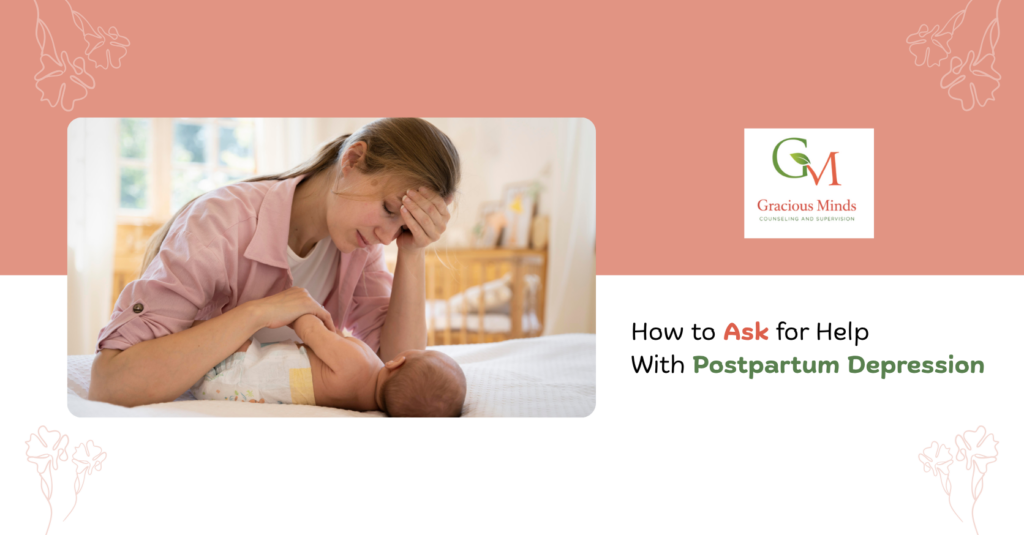
Having a new baby can bring a lot of joy. At the same time, it can bring big changes and heavy feelings. Many new parents feel very sad, tired, or worried after birth. This is called postpartum depression. It is very common. But it can be hard to talk about.
Gracious Minds Counseling and Supervision provides client-centered care for adults and families in Sugar Land, Greater Houston, Texas and Louisiana. We want to provide a safe, supportive environment where you may talk, be understood and get help.
Below, we will explore how to ask for help with postpartum depression, why it can be challenging to ask for help and what help is available.
Understanding Postpartum Depression
Postpartum depression (PPD) is a form of depression that occurs after giving birth.
A prolonged sadness or concern that causes difficulty in functioning and throughout the day. You may think you are unable to bond with your infant, or you may cry without any obvious reason.
These feelings do not reflect that you are a bad parent. They know that your body and mind are in a state of transition and require special attention.
Why Is It So Difficult to Ask for Help?
Many new parents find it hard to talk about postpartum depression because they think they should feel pleased after having a baby.
Some people are concerned about other people’s judgment. Others are afraid to confess they are struggling because that indicates they are a failure as a parent.
Such thinking can lead people to hide their sentiments and suffer alone.
The truth is that asking for help is a sign of strength, not weakness. Becoming a parent is a huge shift and everyone needs assistance during the tough times.
You don’t need to go through postpartum depression alone.
How to Ask for Help with Postpartum Depression
Asking for help can be awkward, especially if you don’t know what to say. You need not explain everything precisely. Beginning with a single discussion can change everything.
Talk to Someone You Trust
The first step is to find one safe person to talk to. This could be:
- A partner or spouse
- A close friend
- A family member
- Another parent you trust
You can begin with simple words like:
“I’ve been emotionally challenged since having the baby and I think I need some help.”
The person you talk to does not need to solve everything. Sometimes just hearing someone listen and know you’re not alone helps you feel better.
Talk to Your Healthcare Provider
Your doctor, pregnancy doctor, or your baby’s doctor can also help.
Healthcare providers understand postpartum mental health. They can help you find the right support.
They may:
- Check for signs of postpartum depression
- Talk about treatment choices
- Suggest therapy
- Connect you with mental health professionals
Remember, your emotional health is just as important as your physical health after having a baby.
Consider Therapy for Postpartum Depression
Through therapy, you will have a space where you can talk and share your emotions without fear of judgment.
A trained therapist can assist you to:
- Understand your emotions
- Manage anxiety and stress
- Process difficult thoughts
- Build healthy coping skills
- Adjust to your new role as a parent
At Gracious Minds Counseling and Supervision, we provide supportive adult counseling for those going through life changes, emotional struggles and challenges with parenthood.
Use a Helpline
If you don’t want to speak with someone you know, you can call a helpline. The individuals on the phone exist to assist you. They will listen and offer you guidance.
National Maternal Mental Health Hotline is a free and confidential support line for pregnant and postpartum individuals. You can call or text: 1-833-TLC-MAMA (1-833-852-6262)
If you feel very sad and need help right away, you can also call:
Join a Support Group
A support group is a place where other parents talk about their feelings. It helps to hear other people say, “I felt that way too.”
In a support group, you can:
- Share your story
- Learn from other parents
- Feel less alone
- Get encouragement from people who understand
Many groups are available online and in person.
Sometimes hearing someone say, “I felt that way too,” can remind you that you are not alone.
Why Professional Support Matters
Support from loved ones is valuable, but postpartum depression is also a mental health condition that may require professional care.
A therapist can help you understand and plan your healing.
If you are looking for postpartum depression therapy in the Greater Houston, Texas area, Gracious Minds Counseling and Supervision is here to support you.
We offer comfortable, caring adult therapy to share your feelings, issues and fears. We know being a parent is a lot of change, but you’re not alone.
We serve Sugar Land, Greater Houston and the entire states of Texas and Louisiana.
You Deserve Support and Healing
Postpartum depression can feel very heavy. However, it doesn’t need to be forever. Many parents improve with the proper assistance. They start to enjoy their life and their baby again.
Don’t be embarrassed to ask for assistance. It shows you are strong. It demonstrates that you value yourself and your family.
If you are struggling with postpartum depression, Gracious Minds Counselling and Supervision can help you overcome it.
Contact us to learn about adult therapy and postpartum mental health support today.
FAQs
What is the difference between baby blues and postpartum depression?
Baby blues are mild sad feelings. They go away in about one or two weeks. Postpartum depression is much stronger. It lasts longer. You usually need help to get better.
Will my baby be taken away if I ask for help?
No. Doctors and therapists want to help you, not punish you. No one will take your baby away because you have PPD feelings.